Hunting for the Perfect Title

I’ve written before about titles. They are, like, way important. More important than I would have thought.

It makes sense, though. Whenever I rattle around a bookstore and browse, I’m not pulling each and every book off the shelf to read the back and see if it sounds interesting. I’m running my finger along the spine quickly dismissing titles that don’t sound interesting. If my finger reaches “Pretty Pansy and Her Pouty Puppies” then it’s going to slide on by. That title does not interest me. I don’t care of the series is highly acclaimed, everyone loves it, or anything else. Pretty Pansy is not my thing.

On the other hand, if I see “Descent into the Tomb of Ancient Evil” I’m probably going to pause and at least slide it out to look at the cover. Because I’m a big fan of tombs of ancient evil.

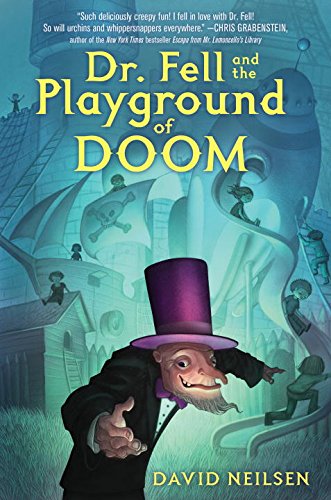
My debut novel, coming out this August (can you tell I’m a bit excited?) is, of course Dr. Fell and the Playground of Doom. That is an awesome title. You read that title and you have a very good idea of what the book is about, the tone of the book, what ages it was written for, and that my favorite color is green. Confession time: it wasn’t my original title. The entire time I was writing the book, the entire time I was polishing the book, and the entire time Awesome Agent was selling the book it was known as, simple, “Dr. Fell.”

Excellent Editor decided that wasn’t enough and slapped “…and the Playground of Doom” to the end of the title. And even though I originally hated the addition, I now thank the Heavens for the change. Because nobody knows who Dr. Fell is. Nobody can get any idea of what the book is about from the title. Fingers would have slid by the spine of my book, blissfully ignorant of how totally awesome it is. Now many of those fingers will stop, pull out my book, and–God willing–purchase a copy.

Book 2 (due out August, 2017! Remind yourself now to pre-order it next year!) has long needed a title. I didn’t have one while writing it. I didn’t have one while polishing it. I didn’t have one last month when I was dealing with all 95 of Excellent Editor’s notes. We had always been referring to it by a single word, which for the purposes of this post I shall pretend was Avocados. I have always known that Avocados is too vague a title, and that it needs more. When I submitted Avocados to Excellent Editor, I assumed Excellent Editor would come up with a much better title. After all, Excellent Editor came up with Dr. Fell and the Playground of Doom! Of course Excellent Editor will have a title!

Excellent Editor did not have a title.

And so I did rewrites on what we were still temporarily calling Avocados.

Time pressed on, Excellent Editor warned that we needed a title soon because they are already discussing cover art (for a book coming out in 18 months). I held a brainstorming session with my daughter, who has read Avocados. I wrote them all down and sent them on. The list contained elements like:

  • The Avocados of Doom
  • The Tastiest Avocados
  • When Avocados Attack
  • To Be an Avocado or Not To Be an Avocado
  • The Killer Avocados From Atlantis

You get the idea.

I didn’t love any of them, but hoped one of them would spark a flame of title genius from Excellent Editor.

No such luck.

I did some more thinking. Went for a run. Had some ideas. Sent another list.

  • The Avocados That Ate Manhattan
  • Death, Taxes, and Avocados
  • The People Who Eat Avocados
  • The Pits (get it? avocados have pits)
  • The One Strange Girl Who Didn’t Like Avocados

Didn’t really like any of them either. Then I got an inspiration. Maybe we’re spending too much time focusing on avocados. Maybe the title should reference something else. New list.

  • The Winged Lemur
  • Lemurs of Doom
  • The Winged
  • The Lemurs of Philadelphia
  • Bedtime For Lemurs

While none of them jumped out at me, I liked the concept of untying the title from avocados. Finally, I thought, we were on the right path.

Then I get an email from Excellent Editor.

“David. Got your new list of title suggestions. Also got your new new list of title suggestions. I’ve shared everything with everybody, and it looks like we’re going to go with Avocados. With a fun subtitle, like ‘Eat them!’ or ‘Great for Guacamole!’ More to come.”

So Avocados it (probably) is. Though not Avocados, because that’s a fake name I made up for this blog post. But it is the one-word title we’ve been using all along as a temporary title. I actually think it’s a good title, and I’m very relieved that the ‘finding a title’ task is complete.

As soon as I get the official word that the title is locked, I’ll share. Heck, I might share all of the suggestions, as well. So you can see the entire process play out on screen.

Won’t that be fun?


They Loved It! I Got 95 Notes!

After much pacing around in circles and chewing my fingernails, last week I received word from Excellent Editor regarding Book 2 (still working on a title). The pacing and chewing is because I am incredibly impatient and had been hoping to hear from Excellent Editor since the day after I turned in the first draft. Because I am her only client and she would of course drop everything to read my book, right? Right?

What do you mean, no?

Anyway. The email was full of conditional praise. The book was a hit! The characters were good–except for where they need to be worked on. The plot was fun and smooth–except for a couple areas that were a bit confusing. The silliness was at just the right level–except for some places where it didn’t seem to fit and others where it didn’t really work. And so on, and so on.

So I quickly downloaded the attached draft with Excellent Editor’s notes and edits and comments. Then I went through the entire book simply “accepting” any typo correction or grammar fix or capitalization change. I mean she’s an Excellent Editor, so if she says I spelled the word wrong or put a comma in the wrong place, who am I to argue?

That left me with the comments. Places in the body of the text where she’d made a note such as “this isn’t working” or “I don’t understand how this could happen” or “I don’t think the character would really say this” or “this is too wordy for middle grade” or just “dear God this is awful!” You know, places where I’d have to actually think and work.

Before starting off on draft 2, I went and counted up the comments. You’ll never guess how many there were (unless you looked at the title of this post).

95.

95 things for me to fix on a document that–according to Mircosoft Word–is 210 pages. That’s, like, almost one every other page. As I scrolled through the document counting the notes, and my count rose higher and higher, my ego deflated more and more. She hated it. She hated everything about it. Every single thing. Well OK, not every single thing. But 95 of them.

I went and sulked, spent time with the cats so I’d feel loved, told myself I was still a good writer, told myself to shut up because no I wasn’t, and scolded myself for being such a goober. I had to look at the bigger picture, and the bigger picture is, she likes Book 2 enough to care. Enough to pay attention to detail and nit pick every little flaw.

So I took a deep breath and dove in, starting with Note #1. I need to see the forest for the trees. If I worry about all the comments one at a time instead of all 95 at once, it makes it more manageable while also stretching out the agony.

A Win-Win!

Off Topic: The Baseball Hall of Fame

Although I generally use this blog to discuss writing and performing and other elements of my most amazing and astounding career, from time to time other elements of life interrupt. Today is one of those days.

I’m a big baseball fan. Although it may give you a hint as to the direction of the remainder of this blog, I grew up and have always been a massive fan of the San Francisco Giants. Growing up in Santa Cruz, California, the Giants were my home team. I went to my first baseball game at Candlestick Park in 1980 and saw WIllie McCovey hit a pinch-hit sacrifice fly in what would be his final season. I was at the famous 1982 end-of-year Joe Morgan Home Run game. I survived the mid-1980s when the Giants were absolutely horrible. I went to the Dave Dravecky comeback-from-cancer game. I had playoff tickets in 1987.

I was also a fan during the Barry Bonds era. As a Giants fan, it was always fun to know how much everybody hated Barry. We didn’t care. He was our Barry. He rocked. We cheered him no matter how surly he was.

This year marks Barry’s fourth year on the Hall of Fame ballot. Once again, he was not elected, but got enough votes to remain eligible next year. Specifically, he received 44.3% of the vote (a player need 75% to get elected). There is one and only one reason Barry Bonds is not in the Hall of Fame. Steroids. There is ample evidence that he used them. Even most Giants’ fans will admit that. Some Hall of Fame voters cannot get past that.

I understand this line of reasoning. I do not agree with it, but I understand it.

There’s another player in his fourth year of eligibility who did not get in this year. Roger Clemens. He received 45.2% of the vote. He suffers from the same demon which torments Bonds. Steroids.

Here’s the thing. Barry Bonds was the greatest hitter of his generation. Roger Clemens was the greatest pitcher of his generation.

Case closed.

So if you are not voting for them, then you are not voting for them because of steroids. Again, I get it. Again, I disagree.

So how does Clemens gets 45.2% and Barry only 44.3%? It’s not a big difference, probably fewer than 10 votes, but that’s 10 people who chose to vote for Clemens and not Bonds. And there is no world or reality where that is defensible. If you vote for Clemens, then you are saying his PED issues are not a problem. If that’s true, then you have to vote for Bonds, too. It’s really very simple.

PED use is Bad = keep Clemens and Bonds out of the Hall. PED use is forgivable = vote for the GREATEST HITTER AND PITCHER OF THEIR GENERATION, HANDS DOWN.

Barry Bonds’ at bats were Events no matter where the Giants played. Home or away, the lines for beer and hotdogs dwindled when Bonds came to the plate. Managers changed the way they managed the game because of him. One guy actually Intentionally walked Boinds with the bases loaded. That means he purposefully gave the Giants a run because he was afraid Bonds would do something worse. And you know what? It worked. The next batter (catcher Brent Mayne) lined out to center and the Giants lost 9-8. And that was in 1997, which is two years before Bonds supposedly began using steroids. He was already The Man.

If that’s not a Hall of Famer, I don’t know what is.

The same can be said of Clemens. His starts were simply ridiculous. The things he did with a baseball should be outlawed. Like Bonds, he was a Hall of Famer long before he supposedly began using PED.

The funny thing is, I visited Cooperstown a couple years ago. Binds and Clemens are all over it. The only place they aren’t is in the Hall of Plaques. So voters are right now choosing to keep these guys out of that one room.

But they’re already in the Hall of Fame.


When Characters Do Stupid Things

I’m reading Nightmares! by Jason Segel and Kristen Miller. It’s a fun MG romp about the world of nightmares intruding on our world and one 12-year-old boy caught in the middle. Spooky. Funny. Has my sensibilities. Good world building and a lot of fun to read, so I’m going to finish it.

But I have a beef.

In order to keep the plot moving, the main character–otherwise a smart kid–has to be clueless regarding an important element of the story. He must ignore the obvious that is right in front of him. We all know the truth, and the fact that he doesn’t is frustrating. I don’t want to give anything away (in case either one of you two who are bothering to follow my blog want to read it at some point), but it is almost ruining the book for me.

I’ve read many books and seen many movies where this occurs (The Screaming Staircase I just finished does something similar). Character A knows beyond a shadow of a doubt that X. Character A goes through the book being led by his belief. Yet the even-slightly-astute reader can easily see that it is Y. Time and again, we see that if Character A would only open his or her eyes and see Y, the book could end 200 pages early and we could all go home. But Character A has blinders on, so we have adventure and danger and exciting scenes and it all is pretty pointless because when we get to the end and Character A suddenly realizes it has been Y all along we just want to smack her.

Here’s a tip to any writers out there. If you need your otherwise intelligent character to miss something obvious in order to keep the plot moving, stop writing. Take a step back. Find another way to advance the story. The only time that sort of thing can be excused is when the ignorance is itself central to the character.

“John hated all orangutans ever since they killed his mother. He needs someone to climb into the tree and get him a banana. If only he didn’t hate orangutans, he could ask one of the very nice orangutans standing around to go up there and get one for him. Alas.”

That sort of works. We see that John is fatally flawed and we are invested in finding out if he will ever get over his loathing of orangutans in time to get a banana. If you’re writing that story, then you should be OK, although you will need to come up with some good reason why John needs to eat a banana.

Unfortunately, many writers are more prone to crafting something like this:

“Barbie’s house is on fire. She asks Randy, who works at a fire extinguisher store, if he has a spare bucket of water she can use to put out the fire. He says no, and is about to say something else but before he has a chance she rushes out to find somebody who can give her a bucket of water to put out the fire.”

That’s lazy. That’s obnoxious. Everyone reading the book is screaming at Barbie. “Randy was going to give you a freakin’ fire extinguisher, you idiot! Gaarrrgg!”

It is a bad sign when the reader knows the answer when the character still needs 50 pages to see what’s in front of his or her face.

As I’m writing Book 3 (and I’m on a sweet tear after plotting it all out on my living room floor), I am well aware of this issue. There are a couple of spots where it would be easy to fall into this trap. I have forced my main character, a girl named Lillian (who is 12 because all MG books star children who are 12), to be smart. This has caused a few inconveniences, because I’ll come up with a cool idea but then think ‘Why wouldn’t she just X and be done with it?’ and go back to the drawing board. There should never be an easy out that is overlooked.

“You mean I could have pulled the drain at the start and then the room wouldn’t have flooded and all the weasels wouldn’t have died? Boy, do I have egg on my face or what?”

I view it as a challenge. Let’s put Lillian in a horrible situation–she’s in a sewer being eaten by a zombie crocodile. OK, now how can she get out of it? She could shoot it with the massive ray gun she had in the last scene. OK, she needs to lose the massive ray gun. Now how could she get out of it? She could light it on fire with one of her flares. OK, we need the flares to get wet in the sewer so they won’t work. Now what can she do?

And so on and so on until Lillian is forced to come up with a clever way to avoid being eaten by the zombie crocodile. Or she doesn’t come up with a way and she gets eaten. It’s up to her.

Ripped Pages Strewn Across My Floor

I’ve been working on Book 3 (which isn’t really the third book of any series, nor is it the third book I will have written, but Book 3 works fine for a title for now) for a little over a month now. Like all projects that hook me, the beginning of the work rushed by and flowed out of my fingers like the creamy center of a Cadbury Egg (they have creamy centers, right? It’s been a while since I had one).

Then, like all projects that hook me, things slowed down. I had a conversation with myself that went something like this.

“Oh, so now that you’ve created a world, you expect to have a fully-conceived story to put in it? Complete with three-dimensional characters, plot twists, some sort of theme, and lots of your usual silliness?”

“Uhm… yes?”

“Right. I’ll get back to you.”

I sat back, looked at my fledgling baby, poked it, prodded it, and came up with a complete story idea. I wrote some notes on a Google Doc and dove back in.

Then I had a cool idea, so I had to go back and add it and that changed some things so I needed to go back again and fix them and then I changed some other things and had to go back to the start to make sure I set them up and then… well then the notes on my Google Doc didn’t make any sense.

I forged ahead, as writers with an inflated sense of ability are wont to do. Things bogged down. Like, trying to walk through a vat of kindergarten paste while wearing Uggs. I went from 1,500 or 2,000 words a day to 300 or 400. The next day I’d go back and rewrite 200 of those 400 and call it a day.

The project stalled.

I cried. I wailed. I berated fate. I watched some TV. And inspiration came to me–though not from watching TV, that was a total waste of time.

I got out on old, blank notebook. A nice one with slightly-thick paper. I opened up to a blank page and wrote the concept for one scene I knew I wanted in the book. Then I ripped the page out of the notebook and placed it on the floor. I wrote another scene concept on another blank page. Ripped it out. Set it down.

Rinse, repeat.

Soon enough, I had about eight pieces of paper on my floor. I arranged them in chronological order. I saw where there were holes and forced myself to write something on a new page, rip it out, and use it to fill the hole. I got interested in the very end of the book, and wrote a number of pages and ripped them all out, placing them in order. Saw another hole, wrote a new page. Got an idea, wrote a new page, set it down to replace an earlier page I’d ripped out. Crumbled up the earlier page–I wouldn’t be using it.

When my family finally came home (what, you think I’d be able to litter the living room floor with scraps of paper if they were around?) they found me sitting criss-cross applesauce on the living room rug surrounded by a large semi-circle of torn pages.

It is a testament to their ability to excuse and overlook (as well as a testament to my habits in general) that they did not strap me into a straight jacket then and there and have me hauled away.

Luckily for me, I had pretty much finished my task. Around me were 26 pages torn from a notebook (remember, a nice one) that told the story of Book 3 from where I was currently stuck all the way to the end. I’d gone and outlined my novel. And I liked it. Some of it made me giggle. Some of those giggles weren’t the deranged giggles of a mad man.

So today I impart upon The Next Bit of the the journey of Book 3, this time armed with 26 ripped pieces of nice-ish paper to guide my way.

And you thought writing was boring.

Bright Red Herrings in Flashing Neon

Happy New Year!

I hope the coming year brings you wonderful things and multiple viewings of The Force Awakens.

I finished reading a book yesterday. This in and of itself is news because it means the book was good enough to keep my attention the entire way through, which is not always easy. The book is The Screaming Staircase, the first book in Jonathan Stroud’s Lockwood & Co. series. I really enjoyed the world he set up, and his prose was smooth and kept me turning pages, so I recommend it to anyone looking for a fun, supernatural middle grade yarn.

And now I’m going to go all negative on it.

Not that it’s bad, because it isn’t (see my recommendation above). But it commits a fatal flaw that would have had me toss the book aside if Stroud wasn’t as good a writer as he is.

SPOILER ALERT

Bruce Willis was dead the whole time.

I always wanted to say that. 🙂

OK, in all seriousness, here’s my beef.

Stroud gives us a mystery. A whodunnit. It is not the central plot of the book, but it is a large element. He then gives us a suspect–a horrible man who was the last known to see the victim alive. There is no direct evidence implicating this man, but our characters very quickly decide it has to be him. He’s just so evil, it must be him. So he’s arrested.

The fact that he’s a red herring is so ridiculously obvious, my four-year-old cat could have picked it up. In fact, she did. She was on my lap while I read the book, and when the new guy showed up, she jumped off my lap and threw up a hairball.  He’s not a Red Herring, he’s a (title of post alert) Bright Red Herring in Flashing Neon. With big yellow arrows pointing to him and a dancing penguin tap-dancing ‘red herring’ in Morse code on the page.

Then another character shows up out of the blue with a too-good-to-be-true offer for the characters. While there is no mention of any connection to the murder, anyone with a pulse (and many without one, this is a supernatural story about ghosts after all) notices that the new guy has all the necessary factors that would connect him with the murder. He’s the right age. He’s a guy.

That’s pretty much all you need.

So here I am, three-fifths of the way through the book, and I suddenly know the big twist awaiting me at the end. I try to tell myself that maybe I’m wrong. Maybe Stroud, who is a good writer, is throwing me a left hook after a fake right-handed slam to the gut. Maybe I’ll get to the end and be all ‘Wow! I didn’t see that coming! Brilliant! Woo hoo!’

Nope.

I get to the end (enjoy the the read the entire time) and the reveal lays out for me like a kitty hoping for a back rub. And it’s exactly what I thought. And I’m bummed.

Did knowing the twist dim my enjoyment of the book? Yes, though only a bit. I’m still planning on reading the second book of the series, because the world is really cool and the characters are fun to follow. But Stroud’s a good author. Why, then, did he telegraph his twist?

One of his problems is a lack of suspects. In the immortal film, Throw Mama From the Train, Billy Crystal explains to Danny DeVito that DeVito’s book doesn’t work because it’s called “Murder at My Friend Larry’s” and there are only two characters, one of whom dies half-way through.

By creating such an obvious red herring, Stroud leaves us wondering who the real killer might be. Since the murder happened 50 years ago, we know it has to be someone old enough to have been alive 50 years ago. At the time of the red herring, there is literally no other character old enough to have committed the murder. And then we suddenly, out-of-the-blue, meet an older character.

It’s not hard to connect the dots.

My upcoming novel Dr. Fell and the Playground of Doom (have you pre-ordered your copy yet?) doesn’t really have a ‘gotcha!’ twist in it, but my second book, the untitled (for now) book being published in 2017, does. I spent a lot of time with my reveal, working backwards, making sure it wasn’t obvious. Leaving tantalizing hints that are not too obvious, but also making sure there are other plausible suspects. I had my advanced readers let me know if they thought it was either too obvious or too ‘swooped in at the last minute with something new so there is no way anyone cold have possibly guessed.’ In the end, I feel fairly confident that my twist will be truly twisty.

Why didn’t Stroud take the same precautions?

Writing twists is a time-honored task for a writer, an opportunity placed in our hands that we must care for and nurture. It is not to be attempted by hacks (not that Stroud is a hack, I just think he got lazy).

So if you’re out there writing a story and you’re considering using a red herring, know that you do at your own peril. Red herrings can be tasty, but if you don’t de-bone them properly, you’ll end up choking, rupturing your esophagus, and frothing up a spout of blood.

That’s never pretty.

Being Rejected

I got a very nice rejection email today.

I submitted a short story of mine entitled “Ascension” to be published in an upcoming anthology. They held the story for quite a while, then just yesterday I receive a lovely, personal email stating in part:

“Our apologies that it took so long for us to reply to you—we had far more submissions than we ever hoped, and yours stood out in a sea of worthwhile pieces. Thus we held onto your story until the editorial team was absolutely convinced of our choices. Alas, “Ascension” still wasn’t quite right for the collection. We loved, loved, loved this story, and we hope very much to see more from you when we reopen for submissions.”

How do you get upset with that? (Well, aside from, you know… being rejected and all.)

As a publisher myself (you’ve purchased your copy of Legends of Sleepy Hollow already, right?), I know how uncomfortable rejections can be. People have sent their baby to you and they are on pins and needles, hoping and praying that you’ll like their work and validate their existence. But sometimes…. well… their work is just…. so…. bad!

A lot of places just send out a form letter.

“Dear Author. Thank you for your submission. Unfortunately, it’s not what we’re looking for right now. Best of luck in the future. The Publisher.”

And that’s fine. It lets the author know that their work was read by a computer program that sifted through the grammar and vocabulary to see if it was even worth passing on to the human overlords. And it wasn’t. Sucks to be you.

Others get really desperate, and you can smell the guilt oozing off the page.

“Dear Wonderful Writer. Thank you so very much for allowing us to read your marvelous story. We wanted to like it, we really did. And we tried. Because it’s really good. Honest. If it were a perfect world we’d totally publish it. But, well, you know… with the whole Syria crisis… and climate change… it’s not a perfect world. Please don’t hate us. We feel really bad having to say no (and by the way, we’re saying no, hope you understand) and wish there was something we could do. But our hands are tied. It’s not our fault. And it’s not your fault, because you’re a great writer. It just didn’t work out between us. Please don’t go off binge-drinking or anything, OK? Send us an email every now and then to let us know you’re OK? Please? Sincerely, The Publisher.”

That way, you know your story has been read by someone with very low self-esteem who really needs a hug right about now.

Me, I tried to be constructive in my rejections. I told myself before I started that I’d send some sort of personal note when rejecting a story. It’s the least I could do. Having been on the other side, I knew how important it was to at least feel like my work had been read.

For the first few rejections I made, I held to this. Complimenting them on the parts of their story I liked, making suggestions or explaining what it was about the story that didn’t work for me. But the submissions kept coming in. And coming in. And coming in. And some of these stories were just plain awful. I mean come on, people! I wouldn’t have submitted some of those things to my third-grade teacher, let alone a professional (as far as they knew) literary outlet. It’s cliche to say people should use spell-checker but… come on! Use spell-checker for Christ’s sake! You don’t even have to do anything! Do you have a bunch of words in your story underlined with squiggly red lines? That means they could very well be spelled wrong! Open your friggin’ eyes!

There were a number of times I really, really, really wanted to send this rejection email.

“Dear Person How Pounded a Keyboard Randomly With Their Meaty Fingers. Are you kidding? This is a joke, right? You’re not seriously hoping I’ll print this garbage, are you? Did you even read it yourself? I tried, because that’s sort of my job, but I couldn’t get past the first fifteen or so words without vomiting all over my computer. Look, I’ll be blunt. You suck. The story sucks, yes, but more than that, you suck. If you honestly think this story is the best you can do, you should not be writing. Anything. Not fiction. Not non-fiction. Not a grocery list. I would go into detail on what was wrong with your story, but I have a life. And you, quite obviously, don’t. Best of luck with the whole ‘breathing’ thing. I’m guessing it might not come naturally for you. Oh, and just in case you haven’t picked up the hint, I’m rejecting your story. I’m rejecting you. Because you suck. Sincerely, The Publisher.”

But I didn’t. Instead, I generally sent something like this.

“Dear Author. Thank you for your submission. Unfortunately, it’s not what we’re looking for right now. Best of luck in the future. The Publisher.”

All of this is simply my way of acknowledging the very nice people who rejected my story in such a kind, humane way. They did it the right way. Probably better than I would have been able to do.

Ironically, I’d already marked down that the story was rejected by them last month, and submitted it elsewhere. Huh.


War Against the Wall-Eye Not Going Well

Comrades!

These are difficult times, indeed. Our major offensive against the Wall-Eye has failed, and our forces are in retreat. The brave men and women gave their all, but they were simply no match for the diabolical cunning of these cruel, merciless creatures.

The assault began when the 5th Regiment, made up mostly of out-of-work circus performers, rounded Bulbous Bluff. These 23 men, women, and monkeys hefted their pitchforks and rolled-up Yo-Yos and stepped past the big rock that looks like Gilbert Gottfried ready for anything.

But what they encountered was not anything. It was something. Something horrible. Hundreds of ravenous Wall-Eye launched a counter offensive, leaping into mouths hanging open in shock, and burrowing their way through our soldiers’ soft, fleshy bodies. The bluff was awash in blood before an organized retreat could be called for, and only seven of our men and women (none of the monkey’s made it) survived.

Not content to obliterate the Fighting Fifth, the Wall-Eye pressed their advance, forcing us to abandon Glassy Glade, Mellow Meadow, Oddly-Shaped Oasis, and about a third of Trenton, New Jersey. We apologize to the civilians abandoned in this time of chaos, and hope your new overlords butcher you all swiftly in the name of common decency.

All humans should know that this is but a single battle. Or rather, a bunch of battles all sort of connected. It is not the war. We will prevail in our struggle. If only because our opponents do not have opposable thumbs.

Remain vigilant!

walleye2

One of the foul demons an instant before it bit the head off of little Jimmy Skateboard–mullet and all.

Dr. Fell available for Pre-Order!

The happy, glorious day has arrived!

My debut novel from Crown Books for Young Readers, Dr. Fell and the Playground of Doom, is now available for pre-order on Amazon.com.

Pre-order your copy today!

Obviously, this is very exciting, and I’ll have more information in the future. For now, feast your eyes on the awesome cover!

drfell


http://www.amazon.com/Fell-Playground-Doom-David-Neilsen/dp/0399568395

http://www.amazon.com/Fell-Playground-Doom-David-Neilsen/dp/0399568395

A First Draft is Born

Last night, somewhere between Yonkers and Spuyten Duyvil on the Hudson River Line, I finished my first draft of Book #2.

I had already finished a rough draft a couple of weeks ago, and had been going through the manuscript line by line, word by word, cutting, fixing, making things fit, attempting to establish some continuity in the story, etc. And now, viola! A First Draft!

The manuscript is out to my steadfast early readers who, I am sure, will come back with all sorts of things wrong with it. That is their job–to ruin my day. I do not blame them, nor do I spend a lot of time at my altar burning entrails and cursing their names to the Elder Gods who will one day rise to wreak vengeance upon them. Honestly.

Having completed the draft, I now feel…. antsy. To start another story. So last night, somewhere between Spuyten Duyvil and Yonkers (going the other direction), I opened a blank page and pounded out a concept that got me all tingly and excited. Not that I don’t love Book #2 (though I am still searching for the right title, obviously), but I need to set it aside for a moment and wait for the feedback to come in before I swiftly create Draft #2. At which point I will send Book #2 (in Draft #2 form) to Awesome Agent and Excellent Editor and hope they like it. But I need something to occupy my creative time as I sit and wait. And wait. And burn entrails.

***

A treat! For you! No, really!

Last night, I preformed in RadioTheatre’s production of Fright Night in New York City. As the company is named RadioTheatre, and the style of live theater is quite audio-heavy, these shows lend themselves quite well to audio recordings.

So here’s a link to the audio from one of last night’s stories, Edgar Allan Poe’s “Berenice.” The recording features me as the main character and fellow RadioTheatre performer Cory Boughton as ‘Carter.’

The story is a little over 15 minutes long. So sit back, relax, pull down the shades, and enjoy Berenice.